
Whether you adopted a new cat or are fostering kittens, follow these steps for a peaceful cat-to-cat introduction. Continue reading to hear two real-life examples of what cat-to-cat introductions can look like.
Why You Need to Bother with Cat Introductions
A cat’s territory is very important to them, so bringing a new cat into your home can make them both feel threatened and stressed. This is the main reason why simply throwing the cats together and assuming that they will work things out between themselves doesn’t always work. It’s not always the case, but you want to avoid having your cat view the newcomer as a threatening stranger.
Not doing a proper introduction means you essentially force your cats to coexist, and this can lead to behavioral issues. Cats may avoid using the litter box, scratch unwanted areas, stop eating, or hide for long periods of time.
It’s possible that your cats may never get along without your help. From the moment you decided to add an additional cat to your home, you make a commitment to help the cats form a positive relationship.
Getting Started with the Introduction Process
Your main goal during this time is to not let the cats see each other. When cats make eye contact with each other too soon, they often see each other as threats.
Start by dedicating a space where the new cat will live during the introduction process, which can last anywhere between a couple days to several weeks. The new cat’s “home base” will not only keep them separate from the other cat during this time, but it will also serve as a safe haven and a place for them to establish their sense of self in their new surroundings.
Please note that by setting up a space for the new cat, your resident cat is likely losing a part of their own territory. This can cause some stress and confusion for your resident cat, so ensure that they still have access to a familiar space to relax during this time.
Let Each Cat Settle in and Establish their Confidence
Allow your first cat to adjust to the changes in energy and the loss of part of their territory. Their confidence is likely a bit shaken because of all the changes they sense. During this time, don’t force them to approach the newcomer’s space.
Allow the newcomer to adjust to their new surroundings in their home base. This step is essential.
By letting each cat settle in before crossing each other’s paths, you give them time to build up their confidence and their sense of territorial ownership. With access to their own scratchers, beds, and toys in their separate safe zones, each cat will feel secure in who and where they are. Without that strong sense of self, interacting with an unfamiliar cat will cause more fear.
Wait until each cat shows you some confident behaviors, such as rubbing against your leg, using their scratchers, and napping comfortably in their favorite spots. If either cat still tries to hide or shows other signs of stress, give everyone more time before trying the steps below.
New Smells
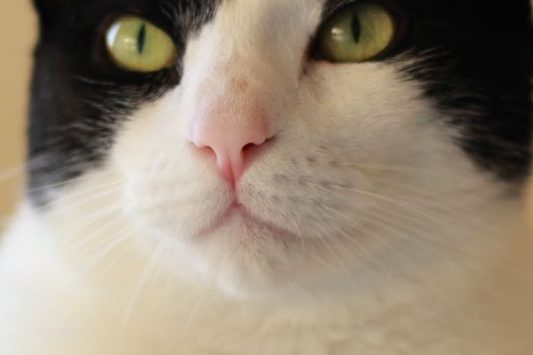
Each cat will rely on their nose to understand what’s going on. Cats each have unique scents from the glands on their cheeks and their toe beans. Even more smells are created during mealtimes and whenever a litter box is used, which lets them learn more about each other.
Try “scent swapping” to help the cats even more. This involves swapping the cats’ toys, bedding, and scratchers for a few hours so they can smell each other.
At this point, your cat may be certain that there’s another cat in the home, even though they haven’t seen each other yet. The cats may growl, hiss, or hide when they’re near each other’s scents. This is normal – they’re just processing the new information and might feel a little nervous.
New Sounds
Before they see each other, both cats need to get used to hearing each other meow, dig in the litter boxes, eat food, and play. Sounds of an unknown origin can be mysterious to either cat, so don’t be surprised if some sounds make them nervous at first.
While the cats get used to the smells and sounds of one another, watch closely for signs that they’re ready for the next step:
- Calmly looking at or underneath the door when they’re near each other
- Feeling comfortable enough to nap by the door
- Reaching under the door for each other without hissing or growling
- Standing tall with a raised, non-puffy tail
You can also feed both cats on opposite sides of the door. Start however far away each cat needs to be from the door to eat comfortably. Once they’re both able to eat right up against the door at the same time without hissing or growling, they should be ready to see each other. This trick also helps the cats start to associate each other with something they love: Food!
New Sights
Now that you know the cats are comfortable being near each other’s smells and sounds, they’re ready to each other for the first time. However, this doesn’t mean just opening a door and letting the cats mingle. You have to carefully guide them through this step.
Start by swapping the cats’ rooms for a few hours. This lets each cat see where the other spends their time, and it lets the new cat get the layout of a new area of their home. If all continues to be well, you can set things up to let them see each other.
Ideally, you and another person can each calmly hold a cat while they get a brief glimpse of each other. If the cats are too squirmy or if this isn’t feasible, you can try putting one cat in a carrier while they watch the other walk, play, and eat.
This is a big step in cat-to-cat introductions, because cat body language is so important. It can be hard for solitary cats to figure out how to read cat body language that they knew as a kitten.
You’ll know your cats are ready to spend time together when they’re able to calmly observe one another and eat near one another. Look for relaxed body language before you do this:
- Smooth fur and tail
- Upright ears
- Slow-blinks
- Calm tails
- Lying on their side
- Purring
Guide the Cats Through Eat-Play Routines
You’re almost to the end! Now the cats are finally ready to have supervised playdates with each other. Again, please know that they absolutely need your guidance for this step. Be prepared to separate them if things get tense.
Start by setting up a shared space where they will play with something like a wand toy or a laser pointer. Toys like these will help them get used to watching each other and understanding each others’ different play movements. Then, reward each kitty for the “hunt” with a meal or snack after playtime is over.
By giving them a yummy snack after playtime, you’ll ensure that the playdate ends on a good note, and then you can put the newcomer back into their home base until the next play-eat routine.
Repeat this sequence a few times a day for as long as you need to. Your cats will let you know when they’re ready to have longer playdates and when they’re ready be fully integrated. A good indication is when you can tell that they’re relaxed around each other the majority of the time and when you feel relaxed about them spending time together.
Don’t Rush the Process
You can go backwards at any step in the process if you need to. Taking a step back doesn’t mean that you’ve done something wrong. It just means your cats aren’t quite ready and might need a bit of a break from each other.
Even if you’ve gotten to the last step in the process, but one day they’re suddenly growling at each other and playtime has turned into attack-time, go back to the previous step.
Finch and Tosca’s Stories
Finch and Minnie
After the quarantine period, during which Minnie was getting used to the changes in energy/smells/sounds, it took Minnie about three days to adjust to the idea of Finch. Finch was always interested in Minnie, but signs of stress I saw from Minnie were:
- Eliminating outside of the litter box twice
- Hissing and growling at the foster room door
- Whining and getting stressed whenever I was in the foster room feeding the kittens
- Hissing and growling whenever she saw the kittens move
- Running away from the kittens (after she approached them and realized that they wanted to play)
Overall, it took Minnie almost three whole weeks to feel comfortable around Finch. When he was 2 months old, all he wanted to do was cuddle with her and get groomed by her. But, we experienced regression when Finch started teething and refining his hunting skills. Minnie hadn’t experienced constant kitten attention before, so she started to hiss at him again. She wasn’t sure what to do; she repeatedly engaged him in play but then immediately regretted it. So, we went back to using Finch’s home base at night so that Minnie could sleep peacefully.
Tosca and Dante
Tosca went home to her new family with a lovely home base all for her and a confident big brother, Dante. His family was so prepared for the gradual introduction process that they even had notes and charts around their home!
However, Dante was immediately interested in Tosca. He approached her home base right away on day one and calmly, but persistently, tried to get inside the room. Just a couple of days later, Dante and Tosca were on the play-eat routine step of the process! Rumor has it that Dante even pushed his food bowl towards Tosca during mealtimes. 🙂
Overall, it took Dante just a couple of days to feel comfortable around Tosca. During the brief and beautiful time they were able to spend together as a family, they played and cuddled like long-lost littermates.
These examples show two extremes of how the introduction process could go for you and your cats. Again, your cats cannot do this without you. It sounds complicated, but the time you spend letting your cats adjust will be so worth it in the end! I wish you the best of luck. 🙂
References: jacksongalaxy.com and hands-on experiences.

Exploring animal welfare one foster kitten at a time

 The Kitten Koop
Leave a comment